From the editor
This one is personal. Across Vancouver Island, people we know — a neighbour in Parksville, a parent in Nanaimo, a retiree in the Comox Valley, a family from Port Hardy to Victoria — are waiting too long for a family doctor, sitting too long in emergency, or wondering where to go after 5 p.m. when the local hospital doors are locked. Island communities deserve care close to home. The facts show that our population has grown faster than the system built to look after it.
A decade of growth, and an older Island
According to BC Stats estimates for July 1, 2025, released in May 2026, the seven regional districts that make up Vancouver Island were home to 927,176 people, up from 790,237 a decade earlier — nearly 137,000 more residents, or 17 per cent. The Nanaimo, Capital and Comox Valley regional districts each grew by more than 18 per cent. In the most recent year, Parksville, Courtenay and Langford were among the fastest-growing municipalities in B.C. We are also older: 26.7 per cent of Island residents were 65 or older in 2025, compared with 20.5 per cent in the province.
The wait for a regular doctor
A family doctor or nurse practitioner is the foundation of that care. As of June 2025, the Ministry of Health’s first official primary-care report, Strengthening Primary Care in B.C., found that 73.8 per cent of Vancouver Island residents were attached to a regular provider, below the provincial rate of 76.0 per cent. More telling is the waitlist: 13.3 per cent of Island residents were on the Health Connect Registry seeking a provider, nearly double the provincial share of 6.8 per cent.
The gaps are uneven, and every part of the Island can see itself in the numbers. In Victoria, only 62.5 per cent were attached, and one in five was seeking a provider. Attachment was 69.0 per cent in the Western Communities, 76.5 per cent in Nanaimo and 78.8 per cent in Oceanside, where 16.8 per cent were still on the registry. Around Tofino and Ucluelet, only 54.1 per cent had a regular provider. North Island attachment was 72.0 per cent, and more than a quarter of residents were neither attached nor on the registry. Comox Valley and Cowichan stood higher, at 85.9 and 83.1 per cent. When primary care is thin, the pressure shifts to the hospital.
Crowded hospitals, and an ER that closes at night
At Nanaimo Regional General Hospital on Nov. 13, 2025, Island Health executive Damian Lange told a public summit the hospital has 354 beds and routinely cares for more than 400 inpatients. That day the count was 418. “How do we do that? We don’t. It results in hallway care.” Ministry data later reported by The Tyee showed both NRGH and Victoria’s Royal Jubilee Hospital operated 10 to 20 per cent over capacity in 2024-25.
Island Health’s own performance measures, published in July 2026, make the same point. As of March 2026, the median wait for an admitted patient to move from emergency to a hospital bed was 15 hours, against a target of 10. Sixteen per cent of hospital patient days were taken up by people who no longer needed acute care, most of them waiting for long-term care. And 7.7 per cent of people triaged in an Island emergency department left before seeing a physician, above the authority’s 4.2 per cent target. Health Ministry figures reported by the Times Colonist showed almost 30,000 such visits in 2024-25, up from just over 11,500 in 2018-19.
In Port Hardy, the emergency department has not been open overnight since January 2023 — nearly four years by late 2026. Island Health has said it still has trouble recruiting emergency nurses and X-ray and lab technologists. Regular hours remain 7 a.m. to 5 p.m. After 5 p.m., a medical emergency can mean a 45-kilometre trip to Port McNeill. That is not a standard of care anyone on this Island should have to accept as normal.
Progress is real. It is not yet enough.
The new Quw’utsun Valley Hospital / Quw’utsun Hulitun-ew’t-hw in North Cowichan — a $1.4-billion, 204-bed hospital more than three times the size of the current Cowichan District Hospital — was 90 per cent complete as of May 2026 and is expected to open in mid-2027, with the emergency department expanding from 17 to 45 spaces. The Longitudinal Family Physician payment model, launched in 2023, has helped more people get attached. Eleven urgent and primary care centres were operating in Island Health as of March 2025. The Island Medical Program, delivered at the University of Victoria as part of UBC’s faculty of medicine, expanded from 32 to 40 undergraduate seats beginning in 2023. Those are the right investments. They are not yet enough.
What we should ask for now
Build housing that health workers can afford in the communities where we need them, including the North Island, the west coast and mid-Island towns, not only Victoria. Speed up credential recognition for qualified physicians and nurses trained abroad, building on the pathways B.C. has already opened. Expand team-based clinics so same-day urgent care is a real alternative to the emergency department. Keep rural emergency departments open, including overnight in Port Hardy, with the staff, laboratory and imaging support those rooms require. And if you do not have a family doctor or nurse practitioner, put your name on the Health Connect Registry. It is not a cure, but it is how the system now matches people to a provider.
We will keep following the numbers. We also want to hear from you. If you have gone without a regular doctor, waited in a hallway, or work in this system, write to us at info@islandmagazine.ca. We will read the letters, and we will make space for them.
The Island is not going to stop growing, and it is not going to stop getting older. The question is whether care will finally catch up.
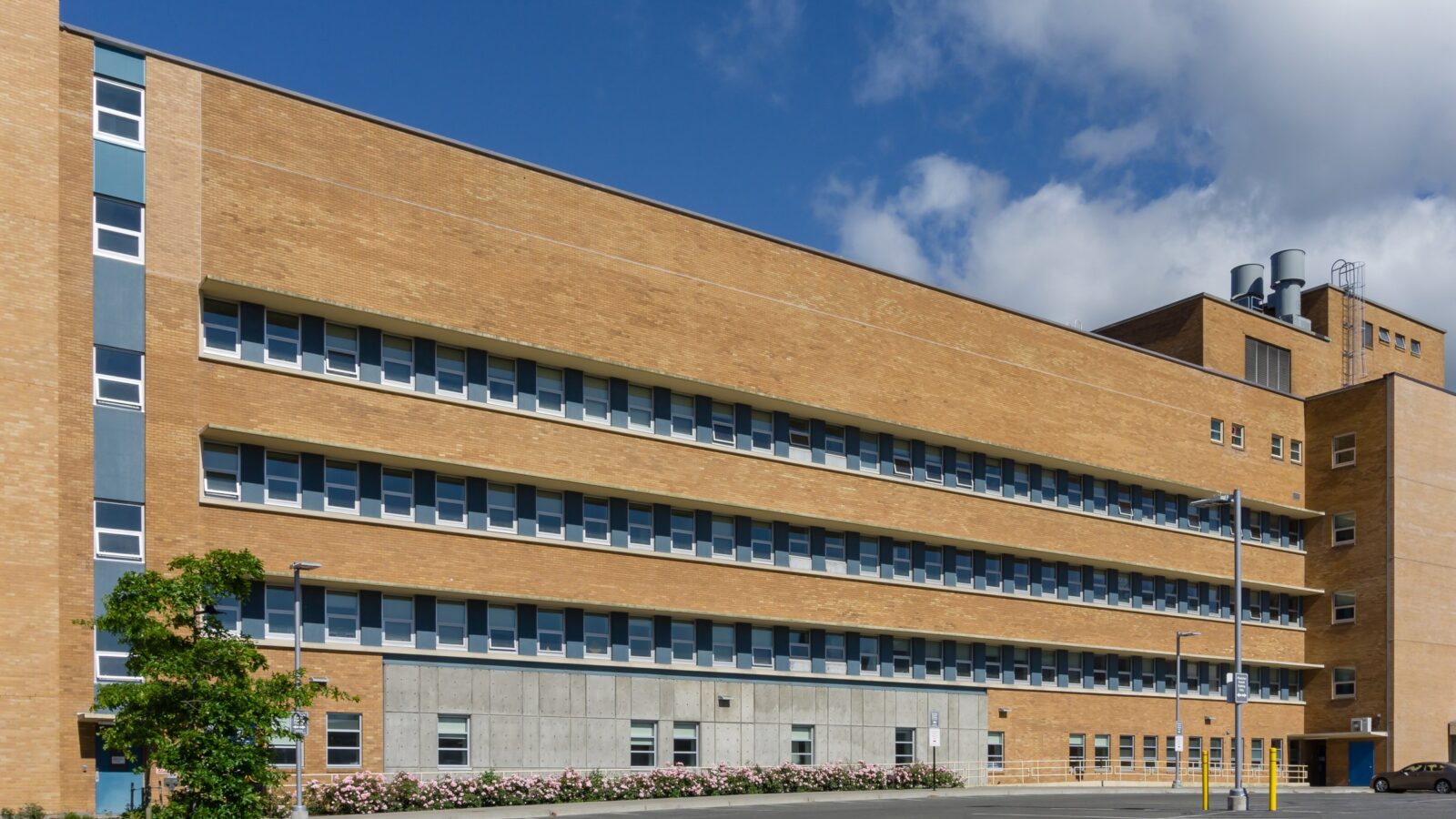
Image: Royal Jubilee Hospital in Victoria, photographed June 23, 2018, by Michal Klajban. Wikimedia Commons, CC BY-SA 4.0. Resized for web from the original.
Sources
- BC Stats, population estimates for July 1, 2015 and July 1, 2025 (released May 2026), summed for Vancouver Island’s seven regional districts; 2025 sub-provincial highlights.
- B.C. Ministry of Health, Strengthening Primary Care in B.C., July 2025 (attachment figures as of June 2025; urgent and primary care centres as of March 31, 2025).
- Alex Rawnsley, NanaimoNewsNOW, Nov. 14, 2025, quoting Island Health executive Damian Lange on Nanaimo Regional General Hospital occupancy, Nov. 13, 2025.
- Michelle Gamage, The Tyee / Capital Daily, Dec. 16, 2025, reporting Health Ministry hospital occupancy data for 2024-25.
- Island Health performance measures, published July 2026, as of March 2026: wait time in ED for an inpatient bed; alternate level of care; left emergency without being seen.
- Cindy E. Harnett, Times Colonist, July 25, 2025, reporting Health Ministry figures on Island Health emergency visits that ended without care.
- Maryse Zeidler, CBC News, Nov. 28, 2025; Island Health listed hours and 2026 service notices for Port Hardy Hospital.
- B.C. government / Island Health, May 29, 2026, on Quw’utsun Valley Hospital / Quw’utsun Hulitun-ew’t-hw.
- B.C. government, Sept. 29, 2022, announcing the expansion of the Island Medical Program from 32 to 40 undergraduate seats, beginning in 2023.
- Health Connect Registry, HealthLink BC.